

Paddock SEND School
Sector: Education
Framework: SCAPE Construction Framework
Client: Wandsworth Borough Council
Project value: £28m
Completion: August 2025

“Marking this milestone in the school’s journey is a real honour. I’ve seen many changes at Paddock, but this is the most transformational. The new building reflects our deep commitment to our young people and will make a huge difference to their school experience. The learning spaces are fantastic, and the pupils are really excited. This is a space where we can nurture, inspire and transform lives. I’m so proud of our team and grateful to everyone who made this possible. The best is yet to come.”
Sarah Santos
Executive Headteacher, Paddock SEND School
A transformational facility that will reshape special educational provision for children and young people across Wandsworth.
Paddock Secondary and Sixth Form School in Tooting is a new, purpose-built, net-zero in operation school that has created 64 additional SEND pupil places for children across the borough.
Delivered for Wandsworth Borough Council by Willmott Dixon, the new school is designed with accessibility and learning at its heart, and supports the council's long-term investment in specialist education.
The purpose-built school, procured through the SCAPE Construction Framework, represents a significant milestone in expanding high-quality, accessible education for pupils with Special Educational Needs and Disability (SEND) requirements across the borough. Completed in time for the 2025/26 academic year, the BREEAM Outstanding school provides 192 pupils with access to appropriate specialist support closer to home.
Increasing local demand, combined with restricted existing space, meant that Paddock SEND School was unable to accomodate additional pupils. The existing school and pupils were to be relocated from within the borough to a new, larger site in time for the 2025/26 academic year.
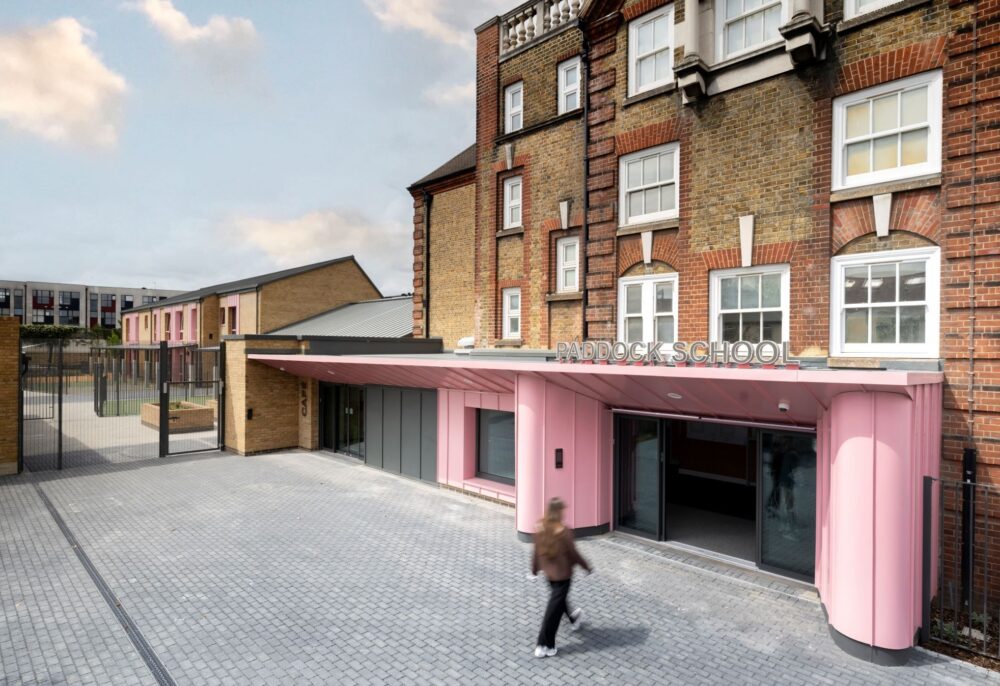
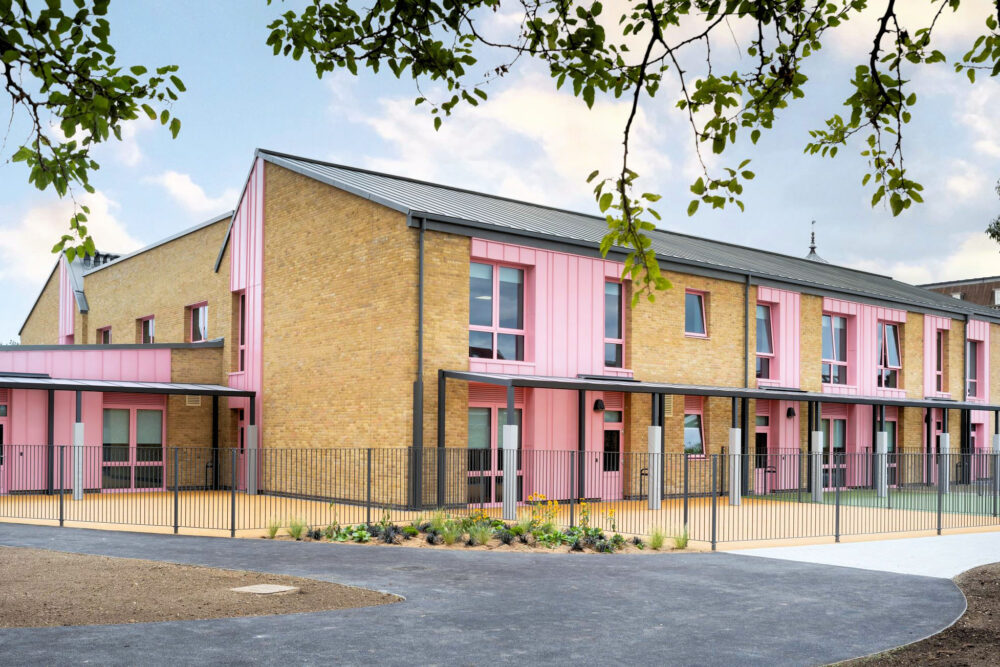
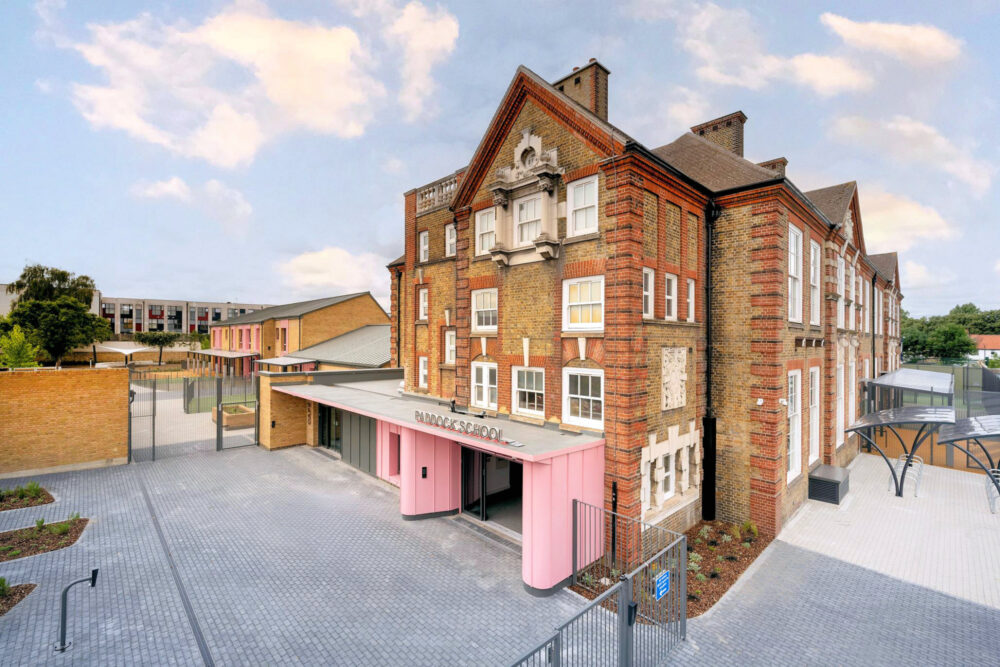
Located on the site of a former Victorian primary school, the project comprised several phases of demolition, refurbishment and new build. The two-storey element of the original school was demolished, while a three-storey junior building was retained, remodelled and extended. A new-build extension completed the project, creating an additional 64 spaces for older pupils and increasing the school's overall capacity from 128 to 192 pupils.
The 4,220m² site was to provide larger, flexible classrooms and outdoor learning spaces, designed with accessibility and inclusive learning at their core. The improved facilities would also include an on-site café, run by pupils and open to the public, helping them to develop practical skills and experience for life beyond school within their local community.
In partnership with Wandsworth Borough Council and key stakeholders, Willmott Dixon identified opportunities to maximise the project’s environmental, social, and economic benefits. These included reducing carbon emissions, improving resource efficiency, enhancing biodiversity, creating local employment and skills opportunities and involving the wider community.
Delivered on time and ready for the 2025/26 academic year, the new school is designed to achieve net zero in operation. The new build element has achieved BREEAM Outstanding certification, with an overall score of 86.8%, while the refurbished element is anticipated to achieve BREEAM Excellent certification.
The expanded facilities provide 192 pupils with SEND learning requirements with enhanced learning spaces designed to support their individual needs and help them achieve their full potential.
The pink-clad, state-of-the-art school provides a range of flexible learning and practical spaces that nurture both learning and real-world skills development. The school's on-site café, operated by pupils and open to the public, provides invaluable practical and workplace skills while strengthening connections between the school and the wider community.
The project has expanded access to high-quality, inclusive education for pupils with SEND, while incorporating measures to improve the building’s environmental performance and resilience to future climate challenges.
The collaborative approach also generated £5.1m in social value return on investment, demonstrating the wider value created through the project beyond its financial investment.
Willmott Dixon worked closely with Wandsworth Borough Council and local partners to create targeted employment, skills and education opportunities, ensuring social value activity responded to local need.
The project created 34 new jobs and, through working with Wandsworth BEST (Business and Education Succeeding Together), the Willmott Dixon team provided work experience placements for local students, including 7 T-Level students who gained hands-on experience on site. Management trainees also shared their experiences of working in construction, while Construction Manager Ben Harvey provided local students with insight into Willmott Dixon, different career paths and the roles available across the industry. Students also took part in live site tours, allowing them to see construction in practice and explore the range of careers available.
Throughout construction, the project team participated in Employ Wandsworth job fairs and visited local schools to discuss the project and careers in construction. In partnership with Wandsworth Borough Council, the team also used local needs analysis, including deprivation, diversity and Ofsted data, to target schools and colleges where careers, curriculum, information, advice and guidance (CCIAG) activity could have the greatest impact. In total, 423 pupil interactions through careers engagement were recorded.
Employment and skills opportunities were also supported through local training providers and the WorkMatch scheme, which connected Wandsworth residents with training and employment opportunities. The project provided accredited training, employability support and practical work experience, with opportunities linked to longer-term employment through Willmott Dixon and its supply chain.
The project team also worked with the local Voluntary, Community, and Social Enterprise (VCSE) network to increase opportunities for social enterprises within the supply chain. This included providing early-stage social enterprises with access to expertise from Willmott Dixon staff across areas such as finance, operations and marketing, helping to strengthen their capacity and support longer-term growth. Overall, 82% of project spend was with SMEs.
“Delivering such an important project for Tooting that will have a lasting positive impact on the lives of children in the area is truly rewarding. Delivering this project to the highest standard of accessibility and quality is a testament to the dedication of our team and the collaboration with Wandsworth Borough Council’s investment in specialist education. This state-of-the-art facility, designed cleverly to ensure the necessary support for its pupils and the opportunities to thrive is an exemplar model of future SEND schools.”
Richard Poulter
Managing Director, Willmott Dixon - South Office
Environmental social value
Sustainability was embedded throughout the project, with a significant focus on reducing waste, reusing materials and lowering carbon emissions.
Measured through The Pallet LOOP, 586 pallets were reused, saving approximately 117.2m³ of waste and 14.65 tonnes of material from disposal. Around 1,000 bricks recovered during the demolition phase were also repurposed within the new SEND school, diverting more than two tonnes of waste and saving approximately 600kgCO₂e.
More than 99% of the total construction waste was diverted from landfill. The project also used 3,582 litres of hydrotreated vegetable oil (HVO) in place of diesel and partnered with Planet First to supply renewable electricity throughout construction, resulting in an estimated carbon saving of 43,479kgCO₂e – equivalent to the annual electricity use of around 16 homes.
The completed school also incorporates 86 photovoltaic solar panels, supporting its long-term environmental performance and contribution towards its target of net zero in operation.
Together, these initiatives contributed to a Social Return on Investment of £5.1m, demonstrating the wider social, economic and environmental value generated through the project.
“We’re proud to have partnered with Willmott Dixon on this vital project, which will provide much needed SEND school places at a time of record demand. Through SCAPE’s Construction Framework, we were able to accelerate delivery whilst ensuring both time and cost certainty. Sustainability remains an integral part of SCAPE’s approach, and it’s fantastic to see this school designed to be net zero in operation, reducing its environmental impact and delivering long-term value for money.”
Mark Robinson
Group Chief Executive, SCAPE
Social value outcomes
This project has been submitted by Willmott Dixon as part of the collaborative Social Value in Construction Benchmarking Report. This report captures the latest insight into the regional and national trends in social value delivery, learn more here.
£5.1m
Social Value Return on Investment
34
New jobs
423
Pupil interactions through careers engagement
409
Training weeks
82%
SME spend
In collaboration with:


Meet the lead:

Kevin Hutchinson
Framework Manager
Project gallery

SCAPE Construction
For the public sector
SCAPE Construction frameworks can deliver projects of any size and complexity and are supported by an extensive local supply chain.
Social Value in Construction
Benchmarking Report
SCAPE's annual report in collaboration with Social Value Portal that captures the latest insight into the regional and national trends in social value delivery.