

Armley Gyratory
Framework: SCAPE Civil Engineering Framework
Client: Leeds City Council & West Yorkshire Combined Authority
Location: Leeds, Yorkshire and The Humber
Value: £41.96m (total scheme)
Timeline: May 2022 – May 2025

“We’re delighted to see Armley Gyratory footbridges fully opened to residents again, across this important scheme to transform travel on a key piece of the city’s infrastructure. I’m pleased to see this scheme has completed during some challenging conditions, all while maintaining an essential route and keeping traffic flowing around the city.”
Councillor Jonathan Pryor
Deputy leader and executive member for economy, transport and sustainable development, Leeds City Council
Armley Gyratory is a key junction in Leeds used by approximately 100,000 vehicles every day.
On behalf of Leeds City Council, Balfour Beatty has completed a major programme of highway and active travel improvements at the junction through the SCAPE Civil Engineering Framework.
Funded through the West Yorkshire Plus Transport Fund and located on one of Leeds' busiest transport corridors, the £41.96 million scheme was designed to improve connectivity, accessibility and safety for all users while helping to ease congestion at a key gateway into the city.
Works were split into two phases. The highways phase enhanced the operation of the junction, improving traffic flow and reducing congestion while also delivering significant landscaping improvements across the site. The second phase involved the replacement of three ageing footbridges with modern, fully accessible structures, creating safer and more attractive routes for pedestrians and cyclists.
The official reopening of the footbridges in August 2025 marked the completion of the wider scheme. As part of Leeds City Council's Connecting Leeds strategy, the project supports sustainable travel choices, strengthens connections between local communities and Leeds city centre and contributes to the long-term enhancement of the city's transport network.
The completed scheme provides safer and more attractive walking and cycling routes between communities, including Wortley and Holbeck and Leeds city centre.
Alongside improved accessibility, the wider Armley Gyratory upgrades have increased vehicle capacity, improved traffic flow and helped reduce congestion at the junction. More than 550 trees were also planted as part of the project, complemented by landscaping that supports biodiversity and improves the local environment.
During construction, the project team worked through challenging conditions and managed to keep travel disruption to a minimum. The project was registered with the Considerate Constructors Scheme (CCS) and made efforts to raise standards for the communities in which Balfour Beatty worked and to improve the performance and overall perception of the construction industry.
The team was visited by CCS on four occasions throughout the Armley Gyratory scheme and achieved an average score of 45.25 across the visits that is marked as ‘EXCELLENT’.

Social value initiatives
Alongside the works, Balfour Beatty delivered a bespoke social impact package to support the local community, businesses and workforce.
Throughout the project, Balfour Beatty supported a range of educational establishments in several different ways, including attending career fairs, mock interview sessions and hosting school assemblies, career talks and workshops.
The project team worked to directly engage local students of all ages to raise awareness and aspirations for possible future careers in the construction industry. Working with a total of 25 Leeds-based schools and colleges throughout the scheme, Balfour Beatty positively engaged approximately 2,672 pupils. Additionally, the team also worked alongside educational charities such as the Prince’s Trust to provide career guidance for young people not in education, employment or training (NEET).
For younger children, copies of Cones and Building Bridges, Balfour Beatty’s children’s book, were donated to around 725 local pupils, with many benefiting from an age-appropriate career talk assembly alongside receiving their copy of the book. Onsite, Balfour Beatty ran a competition for children of staff members to design road signs, highlighting the impact of road-worker abuse.
The Armley Gyratory project supported 9.6 weeks of work experience on the scheme, with two-thirds of placements supporting female students.
The placements covered a wide range of roles, including sustainability, quantity surveying and civil engineering.
Seven of these weeks were provided for students from Leeds College of Building. The project team also visited the college to take part in a panel discussion on ‘Women in Construction’. The placements were a great success, with half of the students going on to apply for apprenticeships with Balfour Beatty while still on their placement.
In total, the project supported:
- Two graduates (both on the Balfour Beatty graduate scheme)
- A summer placement student
- A year-in-industry placement student from Leeds Beckett University
- Three apprentices (Balfour Beatty and Leeds City Council)
- A site visit from local students
Balfour Beatty focused most of the project’s volunteering efforts on helping to maintain and improve the natural environment in and around Leeds. The team volunteered with four local environmental organisations throughout the project: Leeds Countryside Rangers, Harewood House Estate, Litter Free Leeds and Groundwork.
Taking part in a number of activities, from wild meadow management to laying down a gravel path at a high footfall area of Armley Park, the Armley Gyratory team volunteered for a total of 130.5 hours.
Tree planting formed an important part of the landscaping works, both replacing trees that were removed to facilitate the works and additional planting. In total, the project planted 556 new trees, both around the Gyratory itself and at other appropriate locations around the city.
As well as the environmental volunteering, three volunteers from the project helped for a day at Surplus to Purpose, a social enterprise that prevents food waste and provides affordable food options to local residents by intercepting food before it goes to landfill.
The Armley Gyratory project also donated eight litres of anti-graffiti topcoat paint to the local community group Armley Action Team to help protect their new street art mural on Gelder Road. The mural, named ‘The Gelder Rose’, was created by local artist collective We Belong Here alongside local young people, providing creative learning opportunities and artistic collaboration. The purpose of the mural was to improve the appearance of the area, creating a more welcoming and colourful location, and to engage local young people creatively about their local area. The donation from Balfour Beatty, worth £497, will help ensure that the mural is protected for many years to come.
Social value outcomes
This project has been submitted by Balfour Beatty as part of the collaborative Social Value in Construction Benchmarking Report. This report captures the latest insights into the regional and national trends in social value delivery; learn more here.
£6.4m
social value add through project spend with local small to medium enterprises (SMEs)
£3.3m
social value add through project spend with local large organisations
75%
SME spend
218
weeks of apprenticeships
£1m
added social value through local employment
In collaboration with:


Meet the lead:

Zoe Anastasi
Senior Framework Manager | Civil Engineering
Project gallery
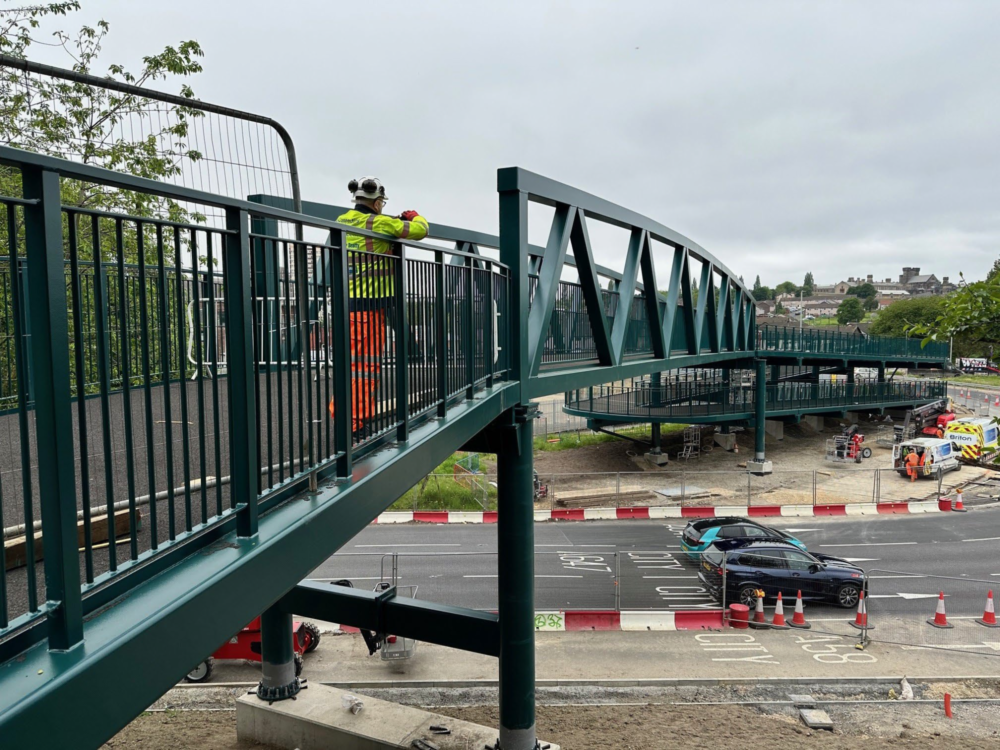
One of three new footbridges, creating safer and more attractive routes for pedestrians and cyclists
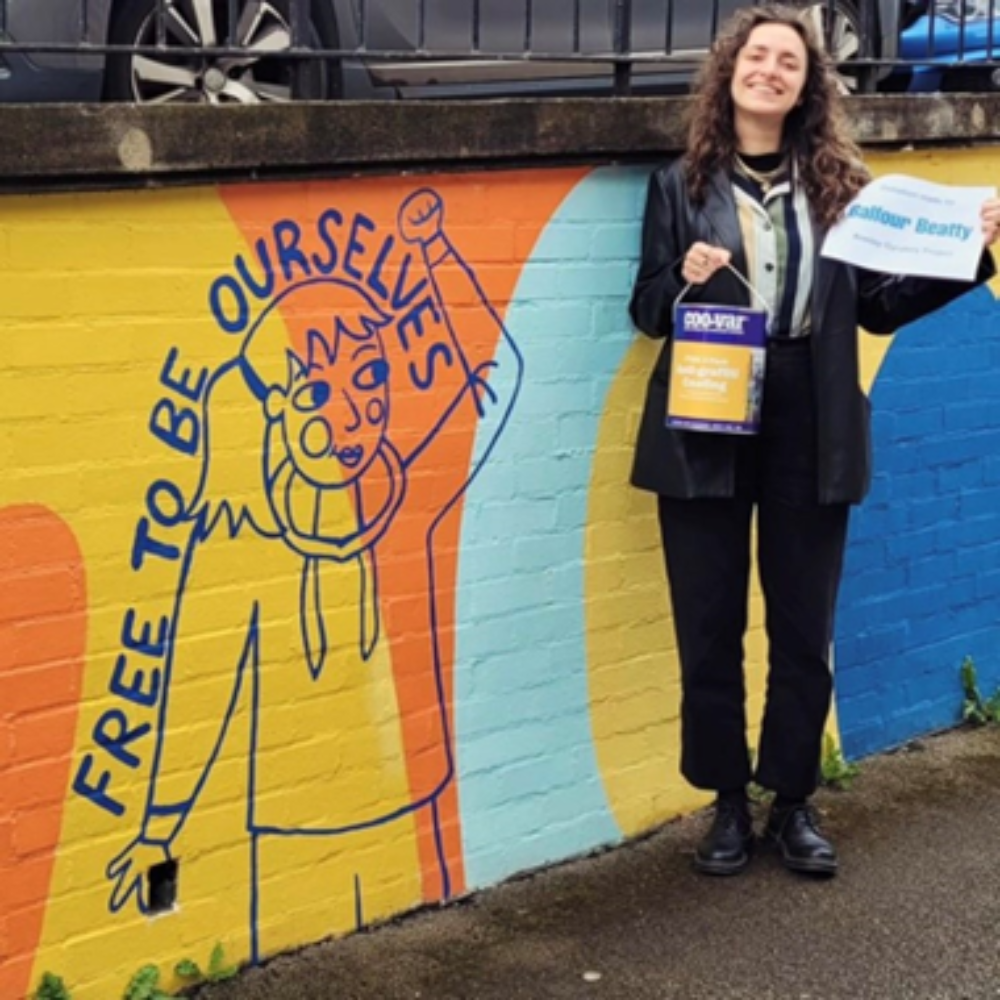
The new street art mural on Gelder Road
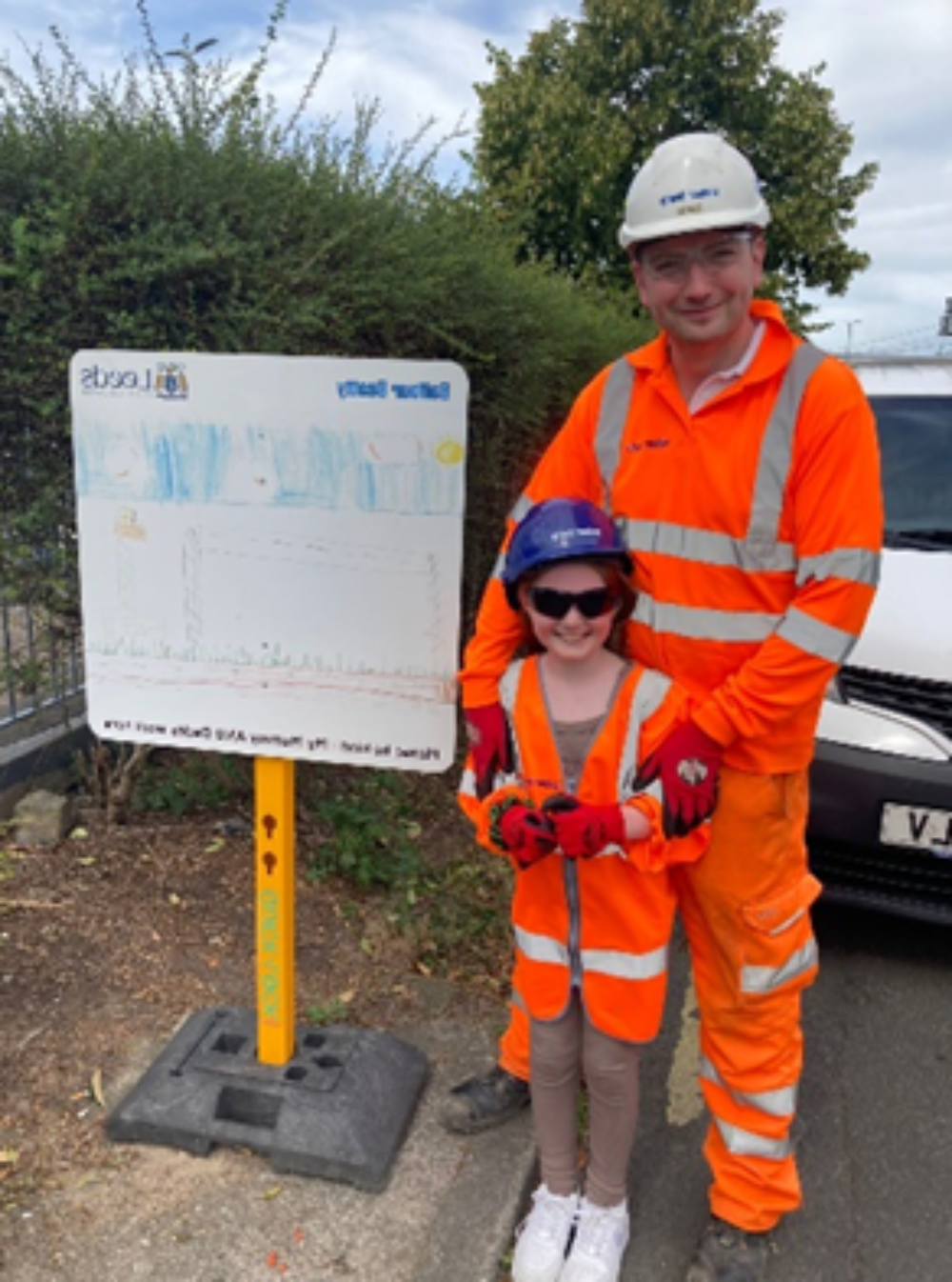
Children of staff members working on the scheme designed road signs to highlight the impact of road worker abuse

Related case studies

Civil Engineering frameworks | Ports (Maritime)
Portsmouth Sea Change

Civil Engineering frameworks | Transport & Infrastructure (Roads/Rail/Air)
Woolwell to The George Phase 1
SCAPE Civil Engineering frameworks
For the public sector
Our Gold Standard Accredited Civil Engineering frameworks are designed to accelerate essential civil engineering and infrastructure projects the UK remains connected, protected and operates with a well-maintained transport network.
Social Value in Construction
Benchmarking Report
SCAPE's annual report in collaboration with Social Value Portal that captures the latest insight into the regional and national trends in social value delivery.