

Woolwell to The George Phase 1
Framework: SCAPE Civil Engineering Framework
Client: Plymouth City Council
Location: Plymouth
Value: £8.43m
Sector: Public realm
Completion: December 2025

“This scheme includes Plymouth’s first cycle track, and there have been numerous achievements throughout. Constructing on this sensitive network with many stakeholders was always going to be challenging, however, the TM strategy and implementation has been a huge success. PCC Highways praised the quality of the scheme at their walkover, and it is refreshing to have members of the public praising the work while I have been on site.”
Client representative
Plymouth City Council
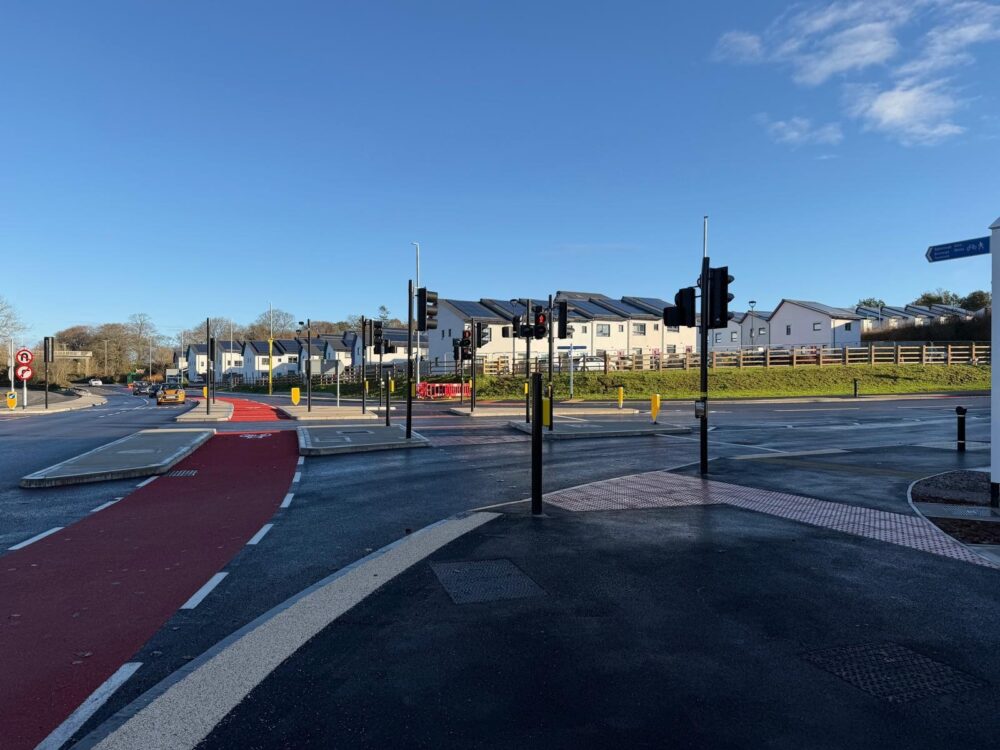
A vital junction and active travel upgrade, Woolwell to The George Phase 1 delivered a key part of Plymouth City Council’s wider transport improvement programme for the North of Plymouth.
Delivered by Balfour Beatty and procured through the SCAPE Civil Engineering Framework, the project created a new signalised junction at Woolwell Crescent, improved walking and cycling provision, and supported safer, more reliable movement along a busy corridor used by more than 30,000 vehicles each day.
The scheme balanced technical delivery with live-traffic management, stakeholder communication and measurable social value, generating £2.7m of added social value and £4.2m total value for money including social value.
The project was needed to reduce congestion at a known pinch point between Woolwell Roundabout and The George on the A386 Tavistock Road, where peak-time queues affected the wider network as far South as Manadon Roundabout.
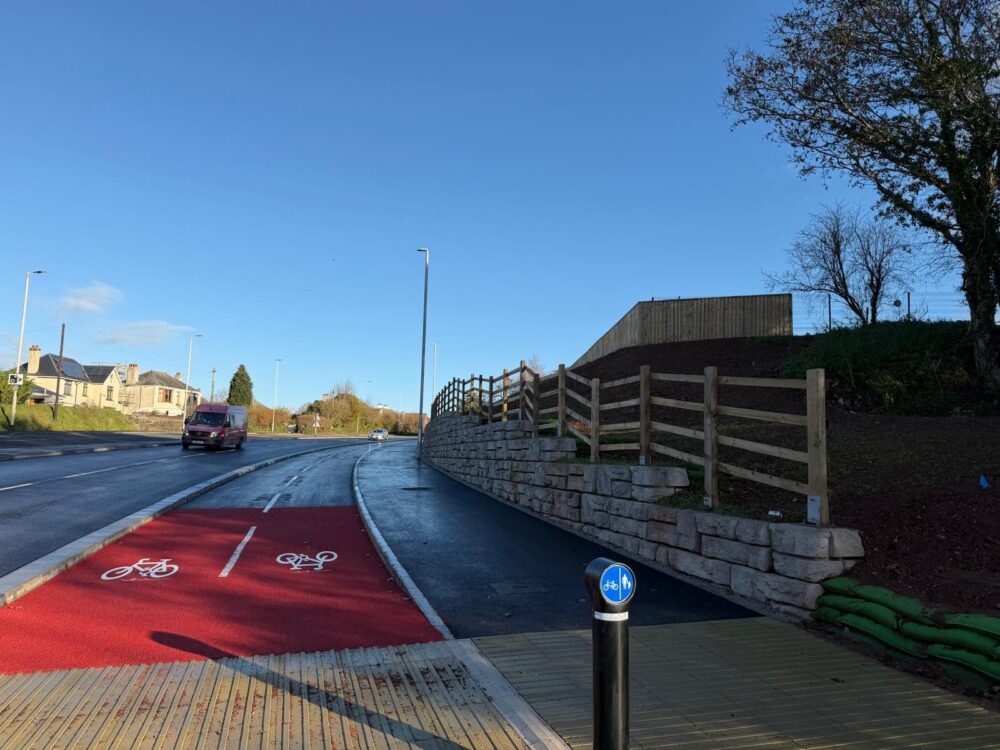
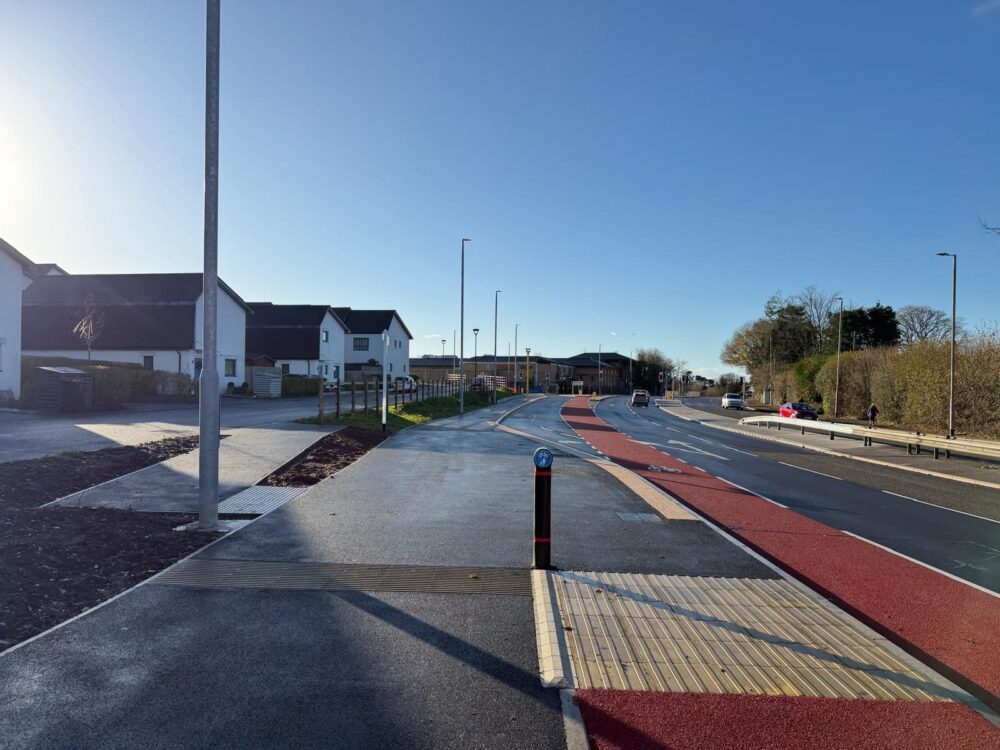
With future growth planned in the North of Plymouth, Plymouth City Council needed infrastructure that would help people move more safely and sustainably. Phase 1 focused on the new signalised junction at Woolwell Crescent, walking and cycling improvements on Woolwell Road and Tavistock Road, and new shared-use facilities to support active travel and future traffic-management arrangements for later phases.
Plymouth City Council secured Transforming Cities Fund support, which added a clear programme driver and the need for practical planning, early contractor input and value-led delivery.
The works were delivered in a constrained live highway environment, with existing traffic, local businesses, homes, bus users and pedestrians all needing to be managed safely.
The team had to maintain access to a large supermarket, residential developments and the wider highway network while delivering drainage, utilities, junction works, retaining-wall changes, surfacing, white lining and new pedestrian and cycle provision. Programme change was managed proactively, including re-sequencing traffic management and managing delays linked to utilities.
The Construction Environmental Management Plan also required tight controls for noise, dust, ecology, waste, drainage, traffic and stakeholder communication. The team used dedicated communications, advance public information, revised traffic arrangements and regular engagement to minimise disruption and resolve issues quickly.
Phase 1 was completed and opened on behalf of Plymouth City Council, creating the new signalised junction and delivering Plymouth’s first cycle track. Client feedback recognised the significant effort involved, the success of the traffic-management strategy and positive comments from PCC Highways and members of the public.
The project was recorded as delivered on budget, with agreed changes including inflationary increases and advance Phase 2 works incorporated within Phase 1. It also achieved a Considerate Constructors Scheme score of 43, including excellent scores for Respect the Community, Care for the Environment and Value their Workforce. The outcome is a strong platform for subsequent phases of the Woolwell to The George programme.

Social value initiatives
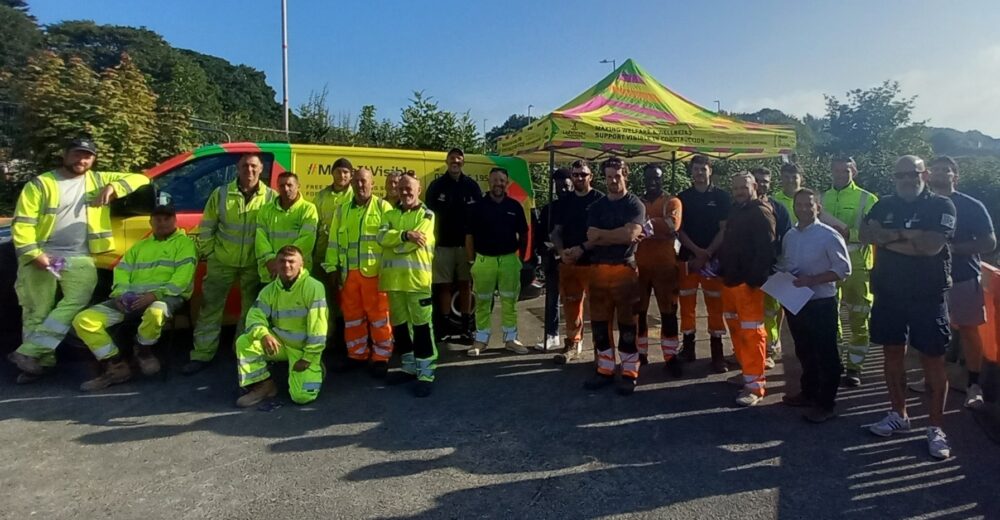
Alongside the infrastructure improvements, Balfour Beatty delivered a range of social value initiatives focused on skills, education and engagement with the local community. This included 63 hours of engagement with schools and colleges, 34 hours of career mentoring, six weeks of student work experience, and 92 weeks of training for graduates, apprentices and NVQ learners. During project delivery, the team also raised £2,000 through fundraising activities and completed 51 hours of volunteering.
The project embedded environmental controls through its Construction Environmental Management Plan (CEMP), including management of dust, noise, vibration, ecology, material storage, waste, drainage and traffic movements. The wider delivery approach prioritised local suppliers where specification and cost requirements could be met, controlled waste through a Site Waste Management Plan, and applied the waste hierarchy through segregation, recycling and compliant disposal. Ecology considerations included tree and root protection, checks for protected species, reptile mitigation measures and ongoing communication with residents and businesses. These measures supported the project’s 99% waste-diversion outcome and its strong CCS environmental score.
“I gained hands-on experience of real-world civil engineering, developed practical skills using industry tools, CAD and technical drawings while learning more about health, safety and how infrastructure projects are delivered. The experience helped build my confidence, teamwork and communication skills, brought classroom learning to life, and made me feel valued and supported within a positive, inclusive working environment.”
Micro-intern feedback
“Seeing Phase 1 completed and open is a fantastic achievement for everyone involved. Delivering Plymouth’s first cycle track alongside a new signalised junction on such a complex network was no small task, and the commitment and skill shown by the team has been outstanding. The positive feedback from PCC Highways and the public reflects the high standards we set and delivered.”
Sam Johnston
Project Manager
Why SCAPE?
What did the SCAPE framework bring to the project?
The SCAPE route enabled early engagement between Plymouth City Council, Balfour Beatty and the wider design and supply-chain team. This allowed the contractor to review buildability, test assumptions, plan the programme and identify potential risk before construction. It also aligned the project to clear social value, sustainability and reporting requirements, including National TOMs commitments, the Social Impact Action Plan and the Sustainability Portal.
What were the benefits of using SCAPE?
The framework supported collaborative planning, quicker mobilisation, programme challenge and practical value engineering. The team identified more than £1.09m of value-engineering opportunities, including avoiding relocation of a large BT structure, reducing retaining-wall scope, using Redi-Rock in place of pre-cast and masonry-faced retaining walls, and reducing delay risk. The approach also helped the team develop a legacy-focused social value plan, monitor delivery transparently and capture evidence for SCAPE reporting.
Social value outcomes
This project has been submitted by Balfour Beatty as part of the collaborative Social Value in Construction Benchmarking Report. This report captures the latest insights into the regional and national trends in social value delivery; learn more here.
£2.7m
total added social value
87%
local labour
63 hours
engagement with schools and colleges
34 hours
career mentoring
99%
waste diverted from landfill
In collaboration with:


Meet the lead:

Zoe Anastasi
Senior Framework Manager | Civil Engineering
Project gallery

Related case studies

SCAPE Civil Engineering frameworks
For the public sector
Our Gold Standard Accredited Civil Engineering frameworks are designed to accelerate essential civil engineering and infrastructure projects the UK remains connected, protected and operates with a well-maintained transport network.
Social Value in Construction
Benchmarking Report
SCAPE's annual report in collaboration with Social Value Portal that captures the latest insight into the regional and national trends in social value delivery.